.svg)


In an increasingly interconnected world, global mobility has become a way of life for many. Yet, this newfound freedom of movement also carries a responsibility – the need to address its impact on sustainability. As we navigate the complexities of climate change, understanding the role of global mobility is crucial in shaping a more sustainable future for all of us.
That is also the reason why ExpatRide decided to dive deep into the topic of sustainability in the area of global mobility which is the core of our business. This series aims to uncover the complexity of global mobility in the context of talent relocation, climate change, and regulations from a holistic perspective. Let us tell you why.
With its ability to connect people, ideas, and resources across borders, global mobility also represents the potential to broaden perspectives and foster cross-cultural exchange and thus serve as a powerful catalyst for positive change. By recognizing the environmental implications of our (not only) travel choices, we can leverage this connectivity to drive innovative solutions and inspire collective action toward more environmentally conscious behavior and the future.
Yes, the industry will be challenged.
And the challenge lies in striking a balance between harnessing the benefits of global mobility while minimizing its effect on the environment.
So what do we see as the key challenges as well as the opportunities of the industry when bearing the transportation angle in mind?
1. Reducing the emissions:
Moving people as well as their possessions is a major contributor to greenhouse gas emissions, primarily from the burning of fossil fuels. Industry needs to speed up the transition to low/zero-emission technologies, such as electric vehicles, sustainable aviation fuels, and hydrogen-powered modes of transportation. The general objective is reaching “net zero” in other words an overall balance between greenhouse gas emissions produced and greenhouse gas emissions removed from the atmosphere.

2. Regulatory compliance:
Governments around the world are implementing stricter regulations and policies to reduce emissions (not only) from the transportation sector. ESG and CSRD in the EU, the SEC Climate-Related Disclosures/ESG Investing, and others in the US, the trend towards sustainability actions legal enforcement for corporations and larger business entities will become a new standard.
3.Changes in consumer behavior:
Individuals are becoming more aware of climate change, and consumers may shift their preferences towards more sustainable choices or slowly change their habits or behaviors. Not only thanks to general awareness but also thanks to a broader spectrum of possibilities and offerings individuals tend to opt for more sustainable solutions when available and also affordable.
4.Considerable financial and resource investment:
Transitioning to sustainable mobility solutions requires significant investments in research, development, and infrastructure but also into a relevant talent, who will help to navigate the interconnected area of regulations and compliance, solutions and will lead the business to its compliancy while still ensuring the business success.
5.Cooperation:
Climate change is a global issue that requires international cooperation and coordination. The mobility industry needs to collaborate with governments, regulatory bodies, and other stakeholders to develop and implement global solutions, to use methodologies and frameworks that are credible and applicable to its users ensuring transparency and possibility to compare businesses and their efforts respectively.
Sustainability as an opportunity to attract new talent
Separate from concerns for the planet, companies that understand changing values recognize that embracing sustainability is not an option but a requirement for being relevant to younger and future generations. Statistics reveal that individuals aged 25-34 (37.25%) and 35-44 (23.78%) are more willing to relocate for work, underscoring the importance of sustainability in decision-making processes.[¹]
A recent Deloitte survey highlights that “Gen Z and millennials seek employer support in making sustainable decisions and transitioning to a low-carbon economy.”[²] In fact, more than 40% of Gen Z and Millenials claim they would have changed jobs due to climate concerns[.³] With these demographic groups increasingly entering the workforce, their worries about climate change will inevitably shape corporate sustainability and relocation strategies.
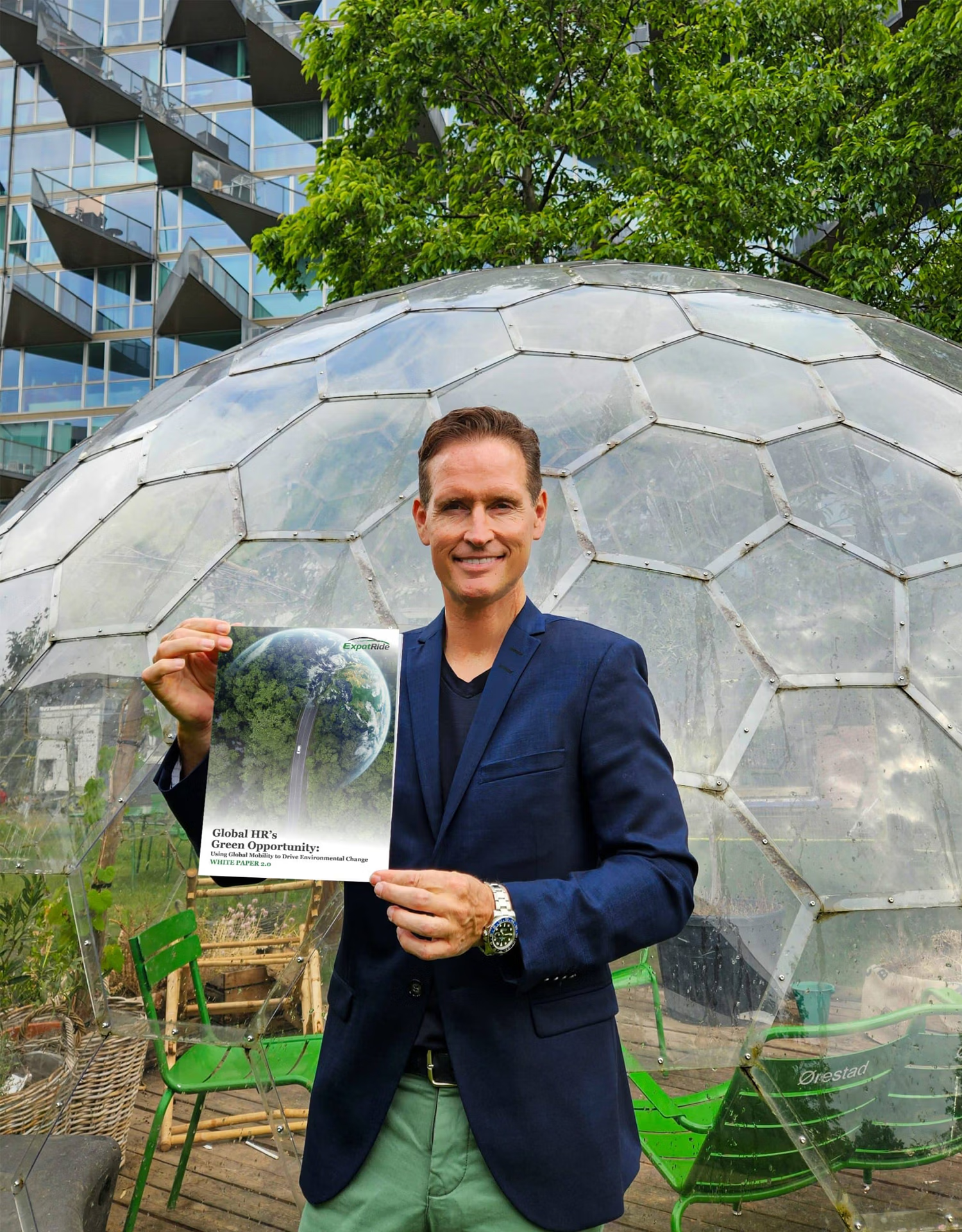
The good thing about challenges is that they can be often seen as opportunities. Finding new ways of thinking and the necessity to adapt to a new status quo can help us to create more efficient solutions, learn new things and progress faster. And this is also the aim of these series – to broaden horizons, inspire, share knowledge and exchange thoughts in an open discussion. Read more in our White Paper on the actions you can take to contribute to a positive change!
Sources:
1. https://gitnux.org/job-relocation-statistics/
2. https://www.deloitte.com/global/en/issues/work/content/genz-millennialsurvey.html
3. https://www.esgtoday.com/over-40-of-gen-z-millennials-would-switch-jobs-over-climate-concerns-deloitte-survey/
.svg)


