.svg)

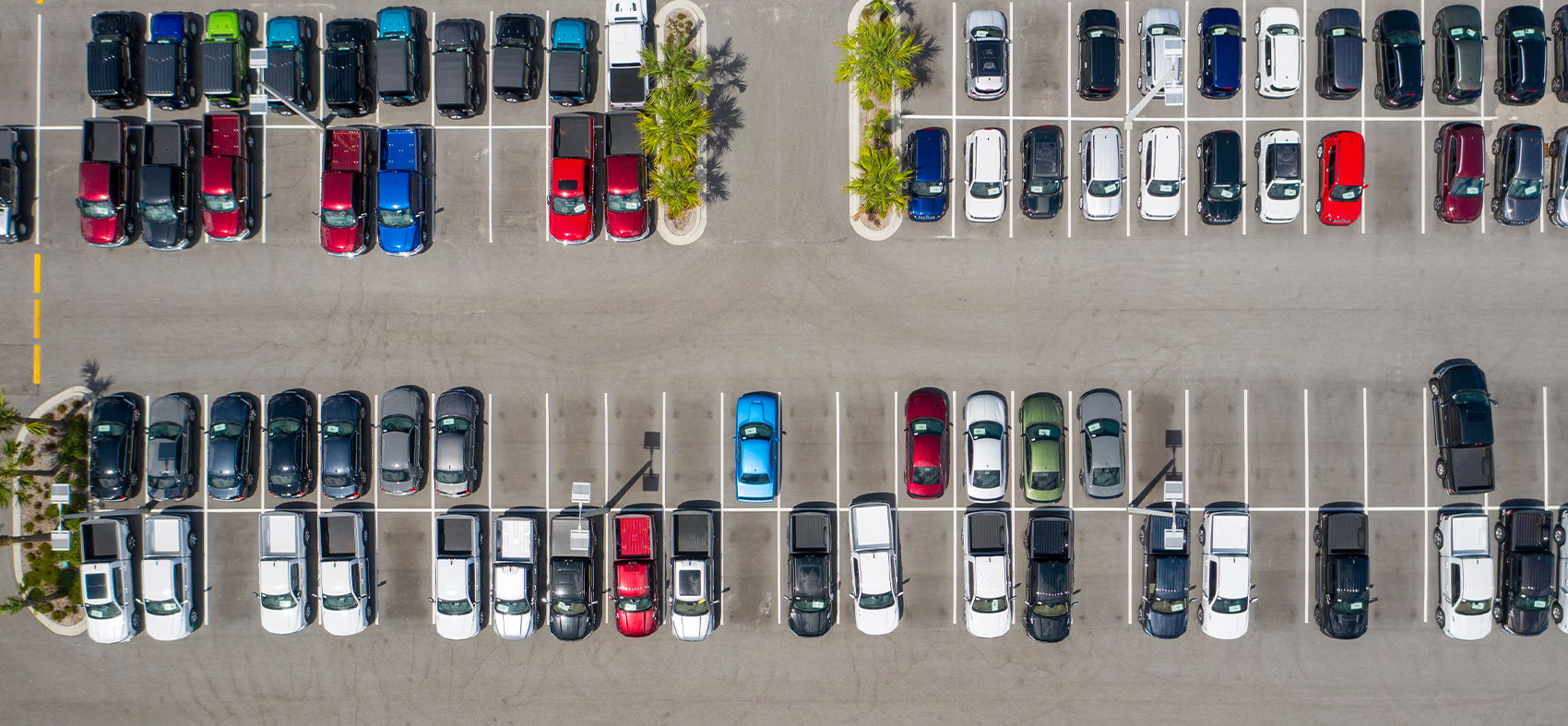
Here’s a rundown on what expats need to learn about Parking in Singapore:
Navigating Singapore’s strict parking laws can be intimidating for fresh expats, but it’s far from impossible. Go easy on yourself – you’ll finding your footing soon enough!
We’ll be going over everything we learned about parking in Singapore below, and sincerely hope that what we have to share eases your lifestyle transition into this wonderful country.
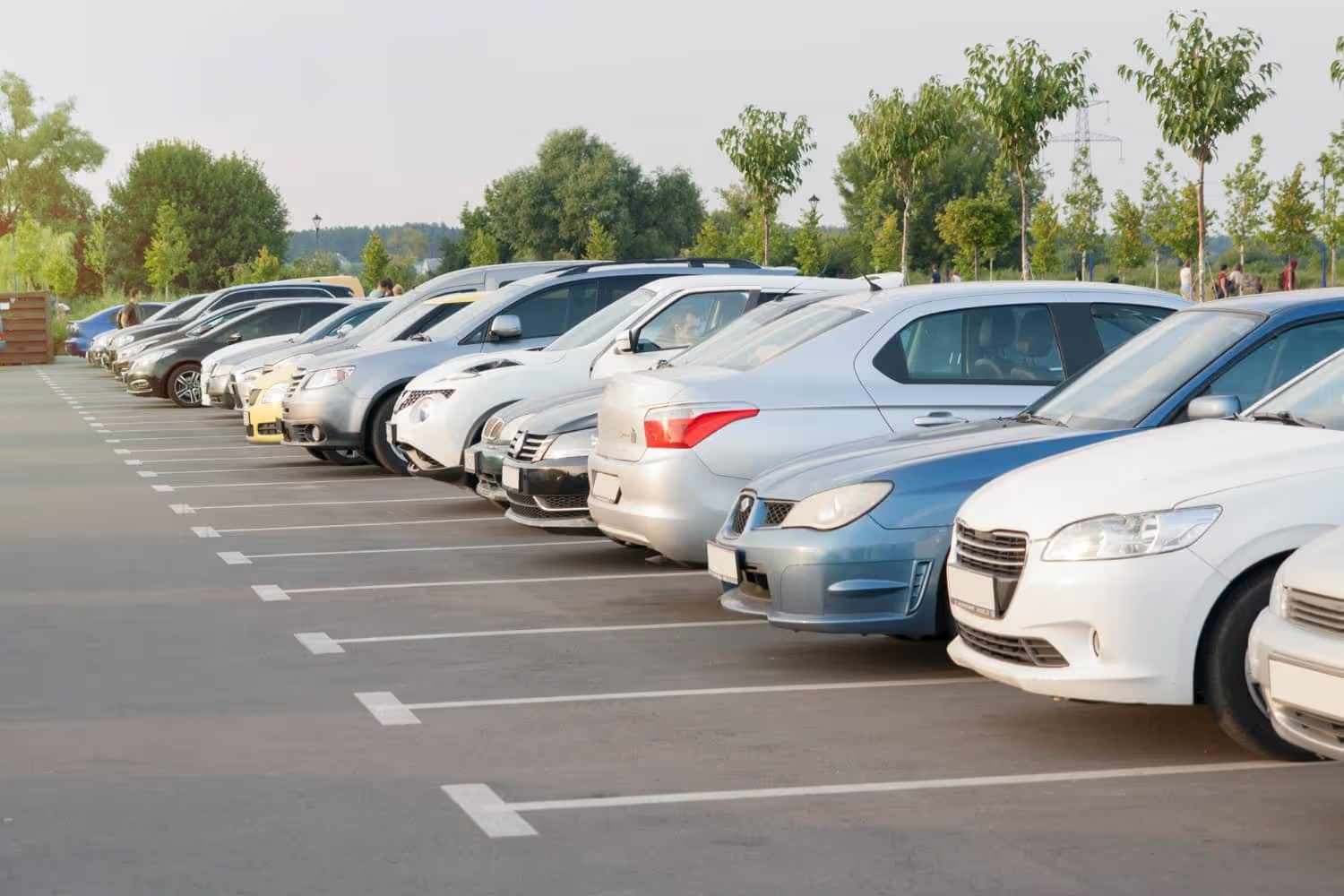
Singapore puts in a lot of effort to regulate the number of vehicles in their land. One of the ways they do this is through parking fees, disincentivizing aimless car rides. Additionally, Singapore has some of the most rigid penalties for parking violations in the world.
They’re not so bad at first, but these penalties do compound if not paid on time. Repeated offenders (drivers with two or more illegal parking violations in one year) may be subject to fines up to 60% higher. A mistake won’t be the end of the world, but they do expect you to learn from them quickly.
These violations also incur demerits to your license, which may lead to your driving privileges being suspended or revoked by the Singaporean government.
Here are some crucial demerit breakpoints Singaporean expat drivers should be made aware of:
It’s worth noting that expats who possess a driver’s license in their home country may be able to skip the probationary license period, though Singapore’s Land Transport Authority (LTA) often subjects applicants to driving tests before converting their old license to a valid Singaporean copy.
Singapore has a strict management policy regarding cars and proper parking, so make sure that you don’t take any needless risks for convenience.
Leaving your vehicle in the wrong place, even briefly, could leave you with a towed vehicle, a hefty fine, and several demerits to your license.

When you want a solid lay of the land, always go to the locals for advice! Online research and travel guides are great starting points, but lived experiences will always trounce them in depth.
If you happen to know a neighbor or two that drives around, feel free to ask them how they’re managing their vehicle. Cars are quite expensive in Singapore, so any person who owns one knows how to keep costs down – parking dues included.
It’s also worth approaching your landlord with this concern, as they’ve almost certainly received similar inquiries from past tenants – they may even have residential parking available for your building. If not, they should be able to suggest some parking options within walking distance.
All in all, don’t be ashamed to ask questions! It’s normal and, quite honestly, expected for expats to come in with a few knowledge gaps. Even if you don’t get a comprehensive answer, you’d still receive much-needed practice socializing with the locals, making future interactions less daunting.

While it’s not a guarantee for your situation, local expats are an absolute treasure trove of knowledge. Other expats have unique insight into your status and context that locals can’t understand. They’ve also had time to learn, synthesize, and apply the information you’re currently trying to dig up.
Don’t be afraid to ask your company if they’ve sent other expats into the country – it’s completely fine, and in fact shows your initiative to acclimatize to the challenges the lifestyle transition presents. Simply reach out to your HR team and give them some time to process your request.
A fellow expat could not only assist you in figuring out parking and general vehicle management in Singapore but may even help you improve upon other aspects in your overall living situation.
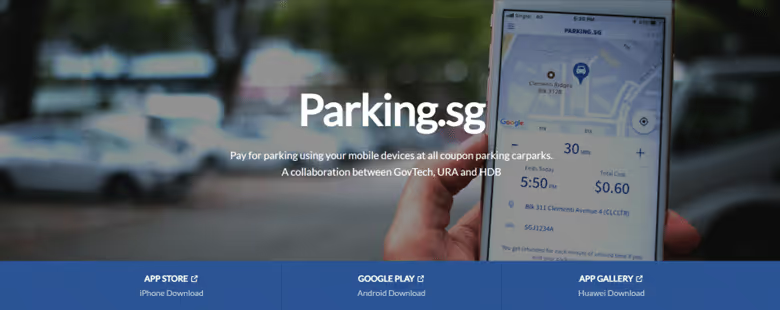
If you’re an expat planning to drive around in Singapore, be sure to download the Parking.sg app. Parking.sg is a government-managed app that assists you with parking payments, offering a great deal of flexibility, convenience, and speed that surpasses traditional payment schemes.
Note: Parking.sg is designed for public parking – on-street parking falls beyond the app’s scope.
A big draw of the mobile app is that it reduces the need for face-to-face transactions. While it’s good to familiarize yourself with the Singaporean community, early interactions can be confusing.
English is one of Singapore’s four main languages, but it’s often spoken in a particular dialect that inherits some pronunciations and loan words from China, Malaysia, and their other SEA neighbors. Expats unfamiliar with this may have difficulty communicating with parking attendants in-person.
It can also be challenging to identify the value of local currency at a glance – especially for coins and bills haphazardly stuffed in your pocket. The time it’d take to double check the value of your money would slow down all your cash-based transactions, frustrating everyone involved.
The mobile app bypasses these issues by providing transaction info through (English) text, allowing you to process the request with minimal risk of confusion. Parking.sg then deducts the appropriate expenses straight from your account or debit card – completely cashless!
The biggest advantage the Parking.sg app offers over traditional parking payment methods is its capacity to provide real-time updates for users.
Users won’t have to drive to a parking lot only to get disappointed by the lack of slots – they could just open the Parking.sg app, see that it’s at capacity, and avoid going there. Please note that Parking.sg only tracks general lot availability – it won’t provide data on individual parking spaces.
Parking.sg takes the initiative to warn users if their parking session is about to end, notifying them about ten minutes before session expiration.
This grants drivers in Singapore some leeway to avoid facing fines and demerits. The app also enables remotely-managed session extensions, sparing drivers a long walk back to their vehicle.
It’s worth noting that Parking.sg supports the control of multiple vehicles from a single account.
Most users aren’t aware of this given how pricy even a single car is in the country, but it’s a useful feature that allows individual users to coordinate and synchronize parking sessions.
This makes it an excellent tool to facilitate family trips or organize business meetings involving other expats in Singapore.
Season Parking is a service offered by the Singaporean government that grants individuals permission to use a designated parking space at a fixed monthly rate – essentially a parking lot subscription.
This service is chiefly handled by two different government agencies: the Housing & Development Board (HDB) and the Urban Redevelopment Authority (URA). While both agencies offer the same type of service, they offer permits for separate car park networks – don’t expect any overlap.
For expats in Singapore, we’d strongly recommend applying with the URA despite their higher overall pricing. This is because the HDB generally prioritizes residents who rent or own HDB properties, while the URA draws no distinction between applicants.

While the initial price point looks steep at first glance (typically between $80-$120, excluding high-demand areas), it’s the billing price for the entire calendar month. You’re also allowed to park for however long you’d like (even overnight) without penalty.
In contrast, on-street parking can run you between $2-$3 an hour, often imposes additional fees for the first hour, and may cost even more than that during weekends, holidays, or peak hours!
Let’s say you had to work an eight-hour shift and happened to find on-street parking at the lowest reasonable rate ($2/hour) with no extra expenses. You’d match the lowest estimated seasonal parking price point at the end of your first work week – and surpass the upper end by your second!
Season Parking may appear expensive, but it’s one of the best ways to save time, money, and peace of mind while parking – making it the perfect investment for expats driving around in Singapore.
While Season Parking offers a great deal of convenience, it’s by no means the perfect answer to parking problems in the country. The service has a few key limitations prospective expats in Singapore need to keep in mind – especially for those who haven’t moved into the country yet.
For starters, users who want a Season Parking permit need to wait for their application to be approved by the appropriate agency – this process can take days or even weeks to push through. In fact, some high-demand parking lots may not even be available for application outright!
A Season Parking permit only means that you’re allowed to use the assigned lot and doesn’t guarantee a slot, so there’s a slim chance that the parking lot may hit capacity before you arrive.
For what it’s worth, this is very unlikely to happen. The reason why the application process takes so long is because the Singaporean government is regulating the number of permitted cars to match the specific parking zone’s vehicle capacity as closely as possible.
On the rare times it does hit capacity, it’s because an event impacted immediate space availability (i.e. maintenance efforts forcing some parking slots to be barred or cordoned off).
While parking space remains consistent in the country, the demand (and price) is liable to fluctuate, depending on circumstances. As an expat driving around in Singapore, it’s important to note these changes, along with how they’ll affect your parking experience in Singapore.
During peak traffic hours (8AM to 6PM), parking in Singapore is at a premium. Public parking lots may implement peak-hour charges, but it’s mostly restricted to centralized or commercial areas. Expect most public parking lots in Singapore to retain a flat rate for their service.
Weekend parking in Singapore follows a similar scheme – prices may surge for select public lots, but the rest should be left untouched. On-street parking will be a lot scarcer for these periods, though.
Privately-owned parking lots aren’t bound by this rule. In fact, most private parking spaces practice surge pricing during peak hours (especially for the first hour!). Try to avoid relying on them unless you have no other parking options available.
During public holidays, a lot of on-street parking becomes free to use in Singapore. This is done to encourage people to participate in festivities, lower parking congestion in the area, and reduce the manpower they need to commit to oversee parking rule enforcement.
Note that we didn’t say “all on-street parking” – always check the nearby signage first, as it’s the main indicator on whether a certain area offers free on-street parking.
During holidays some on-street parking lots may continue to charge, charge a higher rate due to demand, or may even ban parking in that area for the duration of the celebration!
We do need to warn you that Parking.sg won’t help here. The app’s main role is to facilitate paid public parking lots managed by the HDB or URA – on-street parking isn’t covered.
.svg)


