.svg)


A Greek philosopher, Heraclitus, once said, “The only security in life is the constant change.” Those who understand this, be it individuals or businesses, are better equipped to see opportunities in transformation and to adapt to upcoming changes.
With uncertainties and changes happening faster than ever, organizations are recognizing the need to change their approach to relocation and assignment management. This shift goes beyond just relocating employees; it requires a comprehensive strategy that emphasizes sustainability, cultural alignment, technological integration, and more, alongside the traditional business and revenue drivers.
Holistic Approach to Global Mobility
The process of talent relocation and assignment is incredibly complex. We all know it. It involves numerous stakeholders such as corporate in-house mobility managers, consultants, lawyers, relocation management companies, destination service providers, cultural awareness trainers, moving and transportation companies, and others.
Sustainability in relocation is a shared responsibility between companies, employees, and suppliers. Companies can encourage employees to adopt sustainable practices by providing information and resources, while suppliers can support sustainability by offering eco-friendly products and services. (1)
While many parties focus on the initial phase of the move, the social and environmental responsibilities of the organization and the assignee extend far beyond the first few weeks. A holistic approach means considering the entire end-to-end experience, lasting throughout the assignment and potentially beyond involving all players in the game.
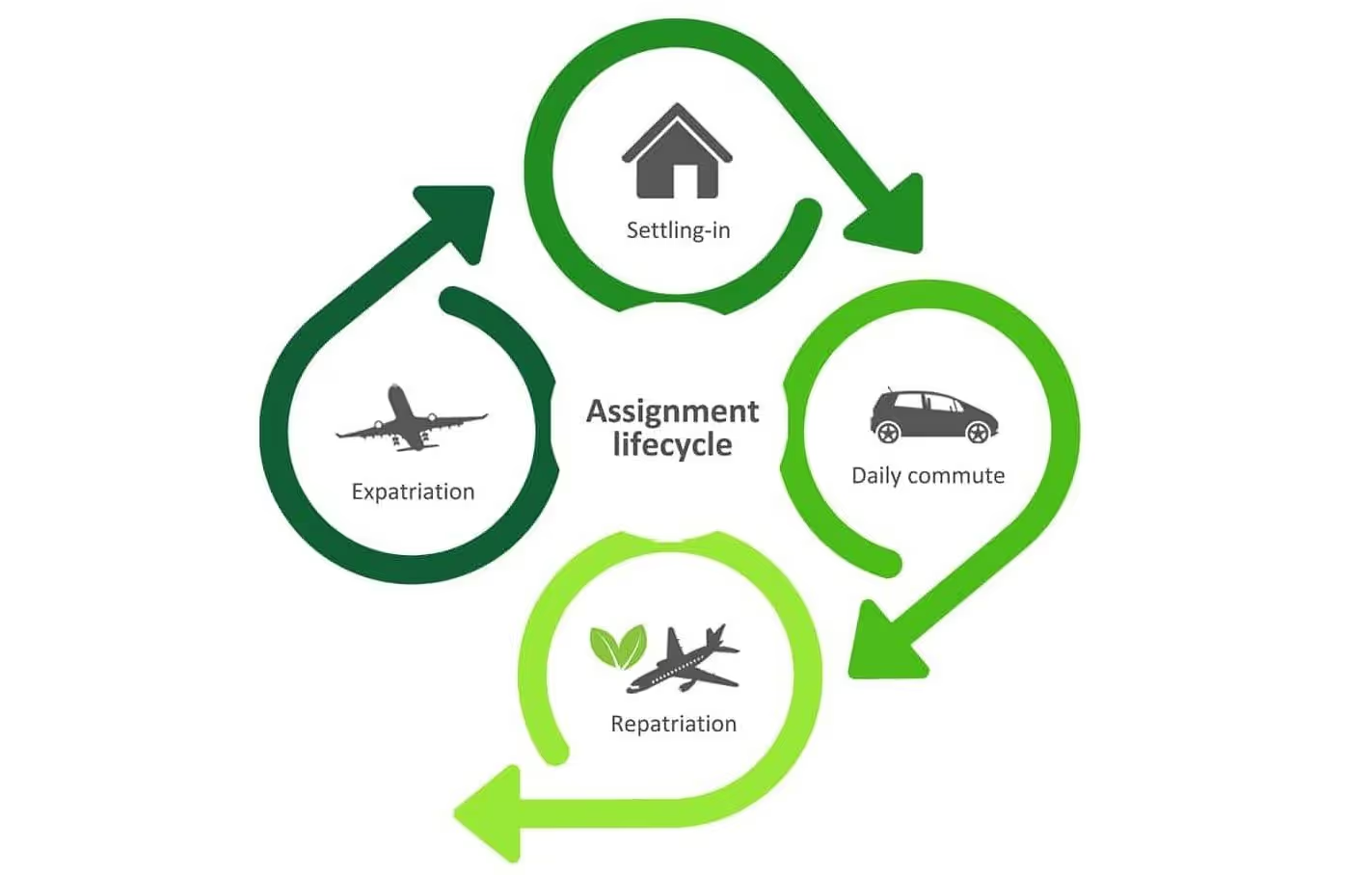
Full Assignment Lifecycle Approach
Sustainable holistic relocation practices consider every stage of the assignment lifecycle, from pre-assignment to repatriation. This approach evaluates sustainable practices that benefit the environment, the company, and the assignee in the long run. Relocation offers a significant opportunity for the assignee and their family to form new habits that can extend beyond the assignment’s duration.
Research indicates that people are more receptive to new ideas, proposals, and information during significant life transitions like moving homes or changing jobs. Professor Bas Verplanken’s study, “Empowering Interventions to Promote Sustainable Lifestyles,” concludes that change interventions are most effective during life course changes, particularly after relocating. Verplanken’s research, which involved 800 participants, revealed that those who had recently relocated were more likely to adopt new sustainable behaviors, regardless of their previous habits’ strength. Participants responded to questions on 25 environment-related behaviors, including water and energy use, commuting choices, and waste (food waste, recycling). Verplanken’s research showed that those who had recently relocated reported more change. The changes were consistent, regardless of the strength of the previous habits.(2)
Let’s consider a scenario where an assignee is transferred to a new location for a two-year assignment. If the employer promotes sustainable practices and encourages his employees/assignees to opt for more eco-consicous choices, such as subsidizing green certified building accommodations, encouraging public transport use, providing hybrid or electric vehicle rentals, and offering cultural training focused on recycling and sustainability in the location, the assignee can start forming environmentally conscious habits which might strengthen over time. After the assignment ends, the assignee is likely to continue these habits, creating a long-term benefit for both the individual, the organization and the planet.
Information and Education is Key
Providing relevant information and educating assignees is crucial for a smooth transition and their well-being, as well as for winning their buy-in and ensuring a genuine engagement. Education helps individuals understand their new environment, cultural nuances, legal requirements, and administrative procedures. Without proper understanding of ones responsibility but also options, the transition might take longer or not happen at all.
The transformative potential of global mobility lies in its ability to turn significant life transition in a form of a “move towards the long-term assignment” into opportunity for lasting change. By integrating sustainability into every phase of relocation, companies can create a ripple effect that extends far beyond the duration of an assignment. It’s crucial to recognize the profound influence the organizations can have on their employees’ lifestyles and the environment. So yes, the journey towards sustainable global mobility is about compliance at the moment; but it’s also about inspiring a collective shift towards greener practices and a more livable future from a long-term perspective.
Sources:
1. https://insights.graebel.com/blog/mindful-mobility-practical-steps-for-a-sustainable-relocation
2. https://www.bath.ac.uk/announcements/capitalise-on-life-transitions-to-instil-change/
.svg)


