.svg)


As the world has been shifting towards more sustainable lifestyles, and the global mobility industry started to search for ways how to optimize its Scope 3 emissions, eco-friendly transportation has become a crucial component of carbon footprint reduction strategy. The automotive industry started reacting to the climate change situation years ago, introducing various types of vehicles designed to be more environmentally friendly than traditional internal combustion engine (ICE) vehicles. There are different vehicle categories using batteries for their operation, however, the respective terms get confused very easily. The most prominent ones you might have already come across include Electric Vehicles (EVs), Battery Electric Vehicles (BEVs), Plug-in Hybrid Electric Vehicles (PHEVs), and Hybrid Vehicles. Understanding the differences between these options can help you to make more informed choices that align with environmental and practical needs when drafting a more sustainable transportation strategy for your corporate relocation purposes.
EVs alias Electric Vehicles
The word EV (= electric vehicle) can serve as an umbrella term as it refers to any car that uses electricity as a part of its driving mechanism. EVs can be further broken down into subcategories such as BEV, PHEV, and hybrids, which define more in detail how the particular category uses the energy from the battery. The reliance on electric power and no or limited reliance on petrol is the key thing that distinguishes EVs from traditional internal combustion engine vehicles. Let’s start from the “least electric to the fully electric” representatives.
Hybrid Vehicles
Hybrid vehicles, as the term suggests, combine two different power sources. An internal combustion engine and an electric motor help the vehicle optimize fuel efficiency while aiming for emissions reduction. The car switches seamlessly between the two power sources and thus reduces the overall consumption of petrol which can be beneficial in short distances while driving in the city. So despite the electric motor being powered by a battery too, the battery gets charged through regenerative braking and the engine itself. And this is the big difference with hybrids. Their battery is not being charged externally and serves more as a “short-distance backup”. The gasoline is simply still needed. That is why it is good to see hybrids as the first step towards sustainable transport. (1)
PHEV – Plug-in Hybrid Vehicle
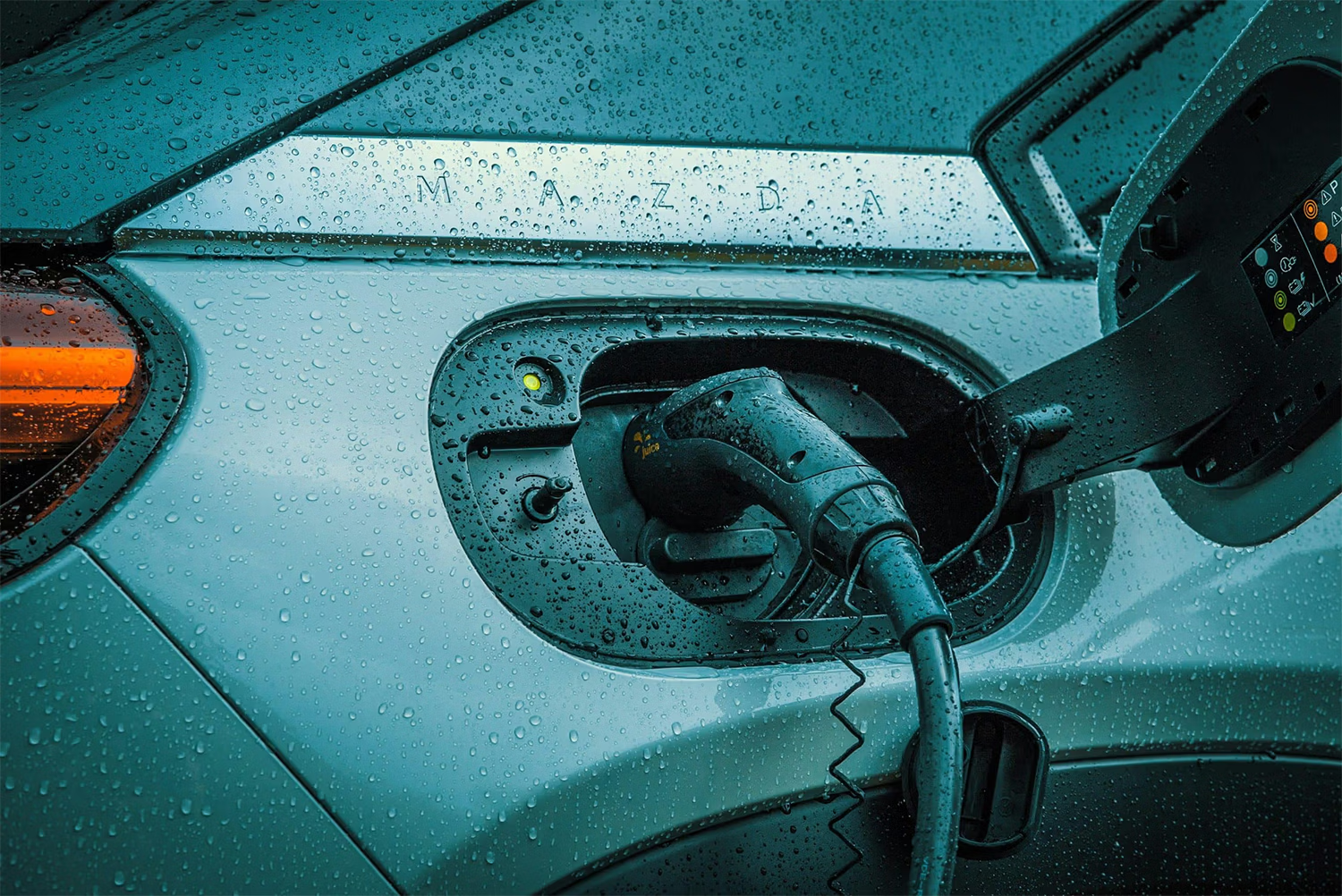
Plug-in Hybrid vehicles can be seen as a bridging solution between the hybrid and the true battery electric vehicle as it combines both motors (battery-powered and internal combustion engine), but with a larger battery that enables external charging by plugging into an external power outlet. That already expands the PHEV capabilities compared to a traditional hybrid. That makes the PHEV operational on electric power only (to some extent), enabling even higher fuel and thus carbon emissions reductions. Once the battery gets depleted, the car switches into the ICE mode. The driving range on electricity is shorter than with fully electric vehicles ranging from 15 to 60+ miles. So for shorter distances, and when charged regularly, there is a minimum need to refuel the gasoline and its overall operation becomes much more environmentally friendly too. (2)
BEV – battery electric vehicle
This category is a pure electric vehicle and it runs only on the electricity stored in the car battery pack. The BEVs have no combustion engine and therefore emit 0 tailpipe emissions. That is why are the BEVs considered the most sustainable or least polluting cars from a long-term operational perspective. It is also expected that BEVs require less maintenance than the standard ICE. Thanks to fewer moving parts and also the fact, that there is no combustion engine, it makes the vehicle rather low maintenance with lower maintenance costs. (3) (4)
After understanding these differences, what does it mean when it comes to CO2 emissions? The more dependent on the gasoline the car is for its operation, the more tailpipe emissions the vehicle produces when driving on the roads. In this article, we focus on the emissions incurred by the vehicle during its operation lifecycle. The production emissions will be covered in another article as it deserves a much deeper dive. So when the vehicle starts to move its passengers, the Transportation and Energy Institute reports that: ” Over a 200,000-mile lifetime, the combustion cycle adds 48 tons of GHG emissions and increases the ICEV total emissions to a level that is 41% higher than the BEV. Similarly, the HEV’s operations increase its greenhouse gas emissions by 18 tons and result in a total footprint that is 21% higher than the BEV, yet 29% lower than the ICEV.” (5)
Of course, the respective individual numbers might differ based on the vehicle category and type, the year of production, the source of electricity, the style of driving, and other conditions. However, the key takeaway is that the BEVs are contributing considerably to an overall decrease in CO2 emissions and thus can serve as a complementary solution within the broader relocation transport strategy. As the automotive industry continues to innovate, sustainable alternatives are becoming more available and affordable, it will become easier to choose more sustainable alternatives.

Sources:
1. OctopusEV
3. EPA
4. Lifewire
5. Transportation Energy Insitute
Image credits:
1. Photo by Hyundai Motor Group on Unsplash
2. Photo by Hyundai Motor Group on Unsplash
3. Photo by JUICE on Unsplash
.svg)


