.svg)


The transition to battery electric vehicles has been gaining momentum globally, driven by environmental concerns, technological advancements, and evolving market dynamics. However, affordability continues to be a key barrier for widespread adoption. Despite the general intentions to purchase BEV being up by a total of 9% year over year, affordability remains the top concern for potential buyers considering EV adoption in 2023 in the US.(1) When examining how the prices of BEVs have evolved historically, costs have shown a consistent decline, a result of both dropping battery prices and intensified competition. For example, in 2023, there were almost 600 EV models available on the market.(2) This increased diversity has brought new options to consumers, though affordability remains uneven across global markets.
The price parity between BEVs and traditional petrol cars varies significantly across regions. In China, the sales-weighted average price of BEVs is already lower than petrol vehicles (even before subsidy), with 65% of BEVs sold in 2023 priced below their internal combustion engine (ICE) counterparts based on IEA estimated. A remarkable 55% improvement over five years. In Europe, pricing differs significantly between countries and segments. For example, Norway’s extensive subsidies have allowed BEVs to achieve price parity, while in Germany, the phasing out of state subsidies for EV purchases at the end of 2022 has slightly impacted consumer affordability, although competition may offset some of the effect. In other countries in the EU nonetheless, BEVs remain more pricey than the standard cars, that is a fact. When it comes to the US market, BEVs have seen declining prices, and some models (e.g., Tesla Model 3) are priced comparably to an average mid-range petrol car. Nevertheless, BEVs remain more expensive on average. Independent studies estimate that the pricing could get balanced over the 2025-2028 period; however, due to volatile commodity price development, global competition, other market forces, and changing regulatory context (including incentives and tariffs), it is hard to predict when will the next more favorable price shift happen.(3)
Over the past year, the average price paid for a new EV has declined by 21%. According to KBB, new EV pricing peaked in June 2022 at $66,997 and has since fallen by $11,597. It’s also true that overall, new car prices are much higher than historical norms, regardless of powertrain. (4)
Total cost of ownership (TCO)
While retail price often captures buyers’ attention first, the “total cost of ownership” (TCO) provides a more comprehensive view. TCO factors include not just the purchase price, but also operating costs (fuel, insurance, maintenance), depreciation and subsidies. And the good news is that the TCO of electric cars is continually decreasing.(5) Several factors are contributing to this trend – volatile fuel prices, but also the introduction of low-emission zones that limit access for standard vehicles, and taxes and parking fees which the EVs are often free of.
So, how do BEVs compare to standard internal combustion engine (ICE) cars when considering TCO? A comprehensive study conducted across 16 European countries and in-depth analysis of their respective costs related to the TCO (initial selling price, taxes, maintenance, tires, insurance, and energy budget) concluded that:
“On average, the overall cost of operating a BEV consistently outperforms that of a comparable ICE. In fact, across the countries examined in this study, several scenarios strongly indicate that BEVs present a more cost-effective option.” (6)
The study used a combined charging approach where 60% of charging was made at home, 30% at the workplace, and the remaining 10% in public places, performed over a representative basket of car models in a corresponding segment during a standardized lease contract of 4 years and mileage of 120 000 km. The most significant savings came from energy costs and lower maintenance requirements. Compared to a petrol car, the BEVs typically incur only half of the energy costs. For example, a VW Golf driving 2500km every month in Germany will spend 233 EUR on fuel whereas the electric VW ID.3 spends 125 EUR, almost a half for driving the same distance.
“The cost advantages of BEVs become more pronounced with an extended lease duration and increased mileage.” (6)
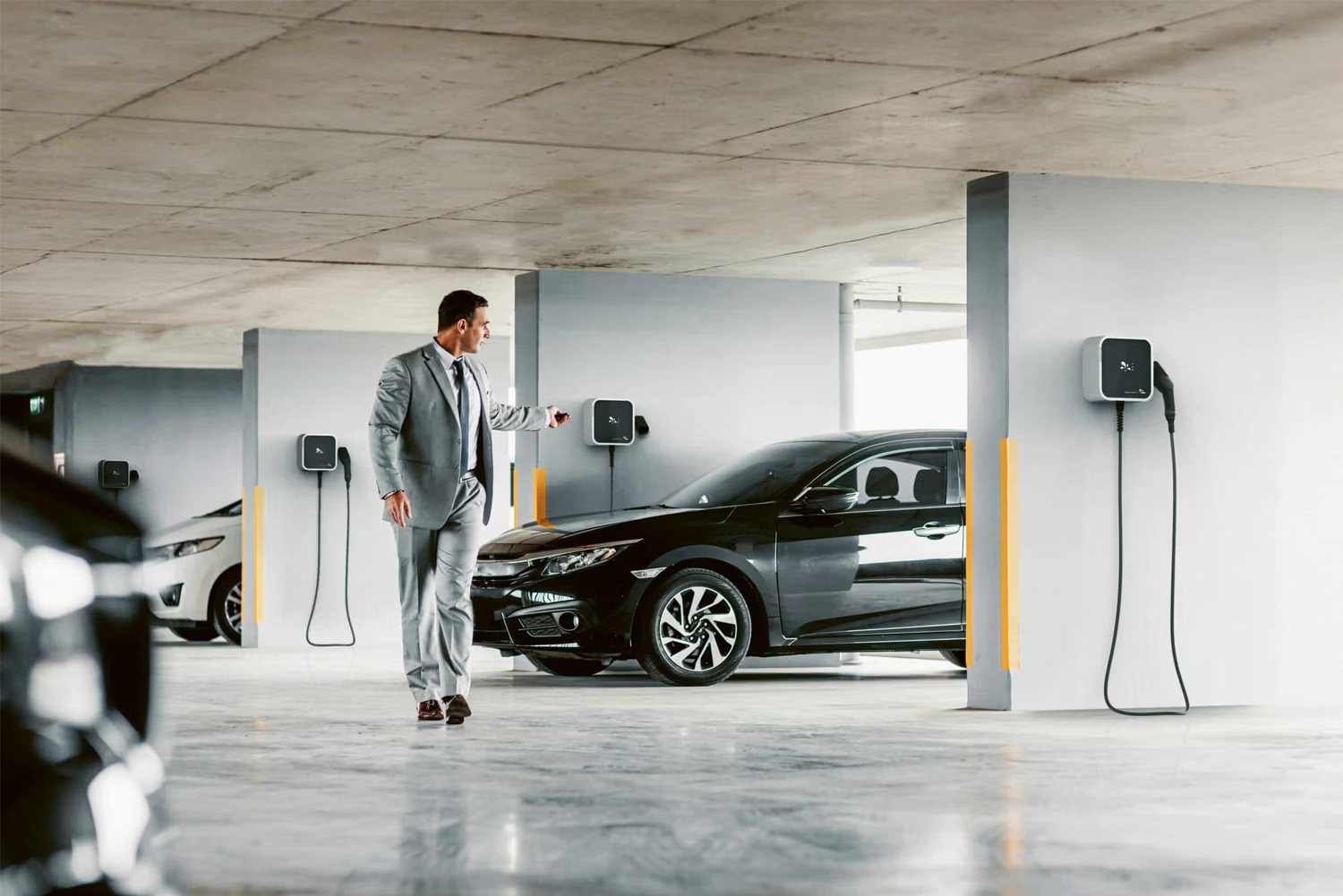
While some markets are demonstrating the potential for BEVs to outcompete traditional petrol cars in terms of cost, the path to universal affordability remains uneven. The electrification of transport presents a great opportunity to redefine mobility and reduce environmental impact, but we have to be able to navigate the challenges with anticipation and adaptability. Policymakers must balance incentives with strategic investments in infrastructure and innovation making sure that BEVs are not only affordable but also accessible. Consumers, on the other hand, must weigh the long-term benefits of BEVs, including energy savings and lower maintenance costs, against upfront costs of the vehicle. So in order to achieve widespread adoption, coordinated efforts from both the public and private sectors will be required to create an environment where BEVs are not just a viable alternative, but the preferred choice for consumers worldwide.

Sources:
1. Deloitte
2,3,5. IEA
4. Caredge
6. Ayvens
Image credits:
1. Photo by Richard Biros on Unsplash
2. Photo by Ethan Rougon on Unsplash
3. Photo by Juice by Unsplash
.svg)


